Picture this: you’re driving down the highway during a rainstorm, everything feels normal, and then suddenly the steering wheel goes light.
Your car seems to float.
For a split second, you’re not driving anymore — you’re just along for the ride.
That’s hydroplaning.
It’s one of the most disorienting and frightening things a driver can experience, and it happens faster than most people expect.
The good news?
Understanding why it happens puts you in a much better position to avoid it — and to handle it calmly if it ever catches you off guard.
In This Post
- What Exactly Is Hydroplaning?
- Why Does Hydroplaning Happen?
- How Speed Affects Hydroplaning Risk
- Tire Tread: The First Line of Defense
- How to Avoid Hydroplaning
- What to Do If You Start Hydroplaning
- Vehicle Features That Help
- A Note on Rain Tires and All-Season vs. Summer Tires
- Quick Reference: Hydroplaning at a Glance
- Final Thoughts
- References
- Frequently Asked Questions
What Exactly Is Hydroplaning?
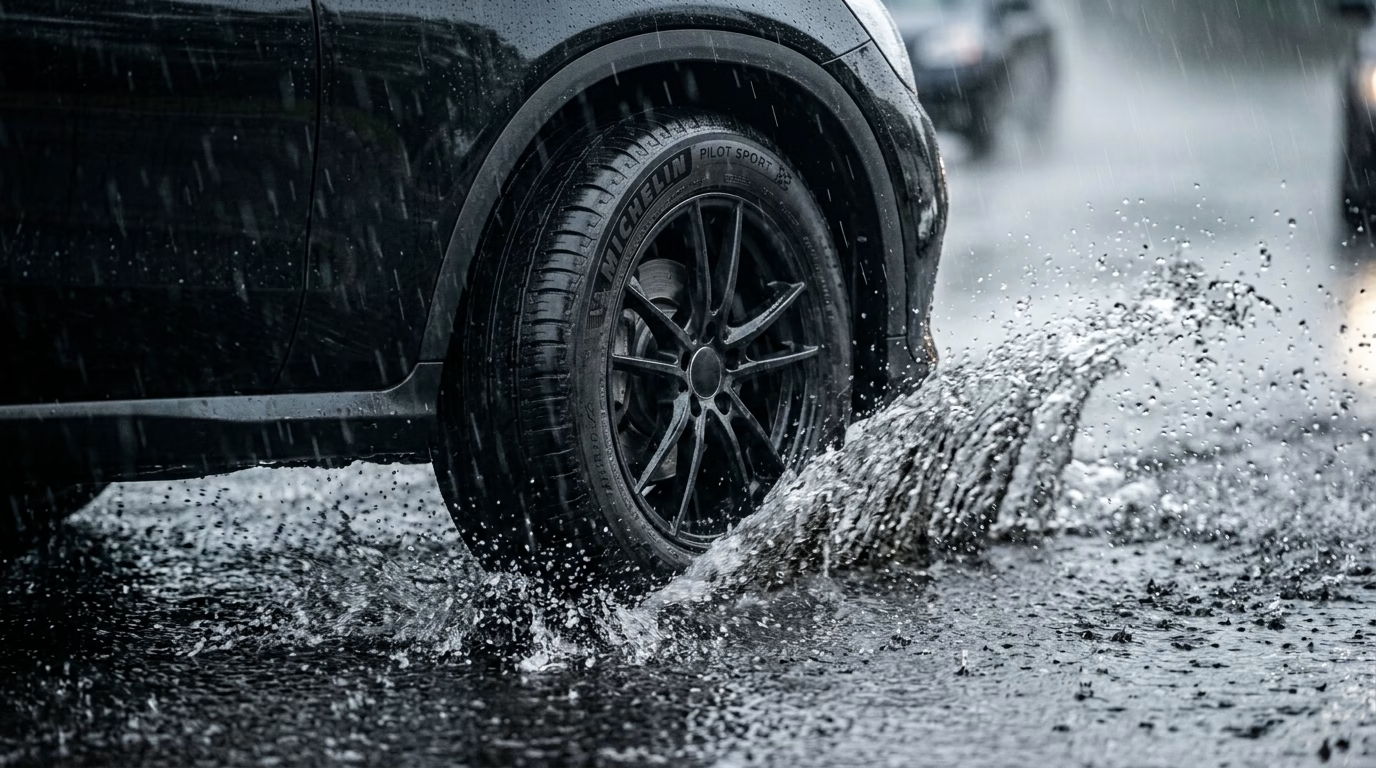
Hydroplaning (sometimes called aquaplaning) occurs when a layer of water builds up between your tires and the road surface faster than your tires can displace it. When that happens, your tires lose contact with the pavement entirely — and with it, you lose traction, steering control, and braking ability.
Your tires are actually engineered specifically to fight this. Those grooves and channels in your tread? Their whole job is to funnel water away from the contact patch so rubber stays on road. But that system has limits, and several factors can push past them.
Why Does Hydroplaning Happen?
There’s no single cause. Hydroplaning is usually the result of a combination of conditions coming together at the wrong moment.
The Main Contributing Factors
- Speed — This is the biggest one. The faster you go, the less time your tires have to push water out of the way. Most hydroplaning incidents occur above 35 mph, and the risk increases sharply as speed rises.
- Tire tread depth — Worn tires are dramatically less effective at channeling water. The legal minimum tread depth is 2/32 of an inch, but traction in wet conditions starts degrading well before you hit that threshold.
- Water depth on the road — Even a thin film of water can be enough at high speeds. Standing water or flooded lanes increase the risk considerably.
- Tire pressure — Underinflated tires have a distorted contact patch and don’t channel water as efficiently as properly inflated ones.
- Road surface — Older asphalt with a polished, worn surface offers less drainage than newer pavement or textured concrete. Crowned road edges and low spots collect water.
- Vehicle weight — Lighter vehicles are more susceptible than heavier ones, because more weight means more downward pressure pressing the tire into the road.

How Speed Affects Hydroplaning Risk
Speed is so critical to hydroplaning risk that it’s worth its own look. Here’s a general breakdown of how risk scales with velocity in wet conditions:
| Speed Range | Hydroplaning Risk | Notes |
|---|---|---|
| Under 35 mph | Low | Tires can typically displace water effectively |
| 35–45 mph | Moderate | Risk begins to increase, especially with worn tires |
| 45–55 mph | High | Even tires in decent condition can begin to lose grip |
| 55+ mph | Very High | Full hydroplaning possible even on tires in good condition |
Note: These ranges shift based on tire condition, road surface, and water depth. They are general guidelines, not guarantees.
Tire Tread: The First Line of Defense
Your tire tread is working incredibly hard every time it rains. A single tire at highway speed can move more than a gallon of water per second through its grooves. When the tread wears down, that capacity drops — and your margin of safety shrinks with it.
Here’s a quick tread depth reference:
| Tread Depth | Condition | Wet Weather Performance |
|---|---|---|
| 10/32″ – 8/32″ | New tire | Excellent |
| 6/32″ | Good | Good |
| 4/32″ | Worn | Noticeably reduced |
| 2/32″ | Replace immediately | Poor — legally worn out in most states |
The penny test is a popular method: insert a penny into the tread groove with Lincoln’s head pointing down. If you can see the top of his head, your tread is at or below 2/32″ and it’s time for new tires.
For a more useful safety margin, use a quarter instead — if you can see the top of Washington’s head, you’re at 4/32″ and getting into diminished wet-weather territory.
How to Avoid Hydroplaning
Most hydroplaning incidents are preventable. These habits go a long way:
- Slow down in the rain. There’s no substitute for this one. Reducing your speed is the single most effective thing you can do to lower your hydroplaning risk.
- Check your tires regularly. Inspect tread depth and tire pressure at least once a month and before any long trip. Keep tires inflated to the manufacturer’s recommended PSI — not the max listed on the tire sidewall.
- Avoid standing water and puddles when possible. That shallow-looking puddle might be deeper than it appears. If you can safely go around it, do.
- Follow in the tracks of the vehicle ahead. Their tires have already displaced some of the surface water. This isn’t foolproof, but it helps.
- Turn off cruise control in wet conditions. If you hydroplane with cruise control on, the system may try to accelerate the vehicle to maintain speed — exactly the wrong response. Always disengage it when roads are wet.
- Stay in the center lanes. Water naturally drains toward the road’s edges and collects in the outer lanes. The middle lanes tend to be higher and drier.
- Give yourself more following distance. Your stopping distance increases significantly on wet roads. The standard 3-second rule should become 5–6 seconds in rain.
What to Do If You Start Hydroplaning
Even cautious drivers can find themselves in a hydroplaning situation. Here’s what to do — and just as importantly, what not to do.
Do This:
- Stay calm. Panicking leads to overcorrection, which makes things worse.
- Ease off the accelerator gradually. Don’t stomp the brakes — just let off the gas smoothly and let the car slow on its own.
- Steer straight or gently in the direction you want to go. Avoid sharp steering inputs.
- Wait for the tires to regain contact. You’ll feel the steering “weight up” again when grip returns. That’s your signal that you’re back in control.
Avoid This:
- Hard braking — This can send you into a skid or spin, especially without ABS.
- Jerking the wheel — Sudden steering changes when tires regain traction can cause a sharp, uncontrolled swerve.
- Accelerating — Adding power while floating only makes things worse.
If your vehicle has ABS (anti-lock braking system), you can apply firm, steady brake pressure if you need to stop — the system will modulate for you. If your car doesn’t have ABS, pump the brakes gently.
Vehicle Features That Help
Modern vehicles come with several technologies that can help manage or mitigate hydroplaning situations:
| Feature | How It Helps |
|---|---|
| ABS (Anti-lock Braking System) | Prevents wheels from locking during hard braking on slick surfaces |
| ESC (Electronic Stability Control) | Detects and helps correct skids and loss of directional control |
| AWD / 4WD | Distributes power to multiple wheels, can improve traction in wet conditions |
| Traction Control | Limits wheel spin to maintain grip during acceleration |
It’s worth noting that none of these systems eliminate hydroplaning. They’re aids, not substitutes for appropriate speed and tire maintenance. AWD in particular does nothing to improve your ability to steer or stop on a hydroplaned surface — it only helps with getting moving.
A Note on Rain Tires and All-Season vs. Summer Tires
If you live in a region with significant rainfall, your tire choice matters more than most people realize.
- All-season tires are designed to handle a range of conditions — dry, wet, and light snow. They’re a solid everyday choice and what most vehicles come equipped with.
- Summer tires are optimized for grip in warm, dry conditions. Their tread patterns are less aggressive at channeling water, making them more vulnerable to hydroplaning in heavy rain.
- Performance all-season tires offer a good middle ground — better wet-weather performance than standard all-seasons without sacrificing dry grip as much as dedicated winter tires.
If you’re regularly driving in heavy rain, it’s worth discussing tire options with a tire professional.
Quick Reference: Hydroplaning at a Glance
| Topic | Key Takeaway |
|---|---|
| Primary cause | Speed + water depth overwhelm tire drainage capacity |
| Biggest risk factor | Driving too fast for conditions |
| Best prevention | Slow down, maintain tires |
| If it happens | Ease off gas, steer gently, don’t brake hard |
| Tire tread minimum | Replace at 2/32″; consider replacing at 4/32″ |
| Cruise control | Always off in wet weather |
Final Thoughts
Hydroplaning doesn’t give you much warning. One moment you’re in control, and the next you’re not. But the more you understand about how and why it happens, the more naturally safe habits develop — checking your tires, slowing down when it rains, staying off the cruise control. None of it is complicated. It’s the kind of knowledge that just quietly makes you a safer driver.
If you’re due for a tire inspection or want to talk through your vehicle’s wet-weather readiness, stop in and see us. It’s a quick check that can make a real difference.
References
- National Highway Traffic Safety Administration (NHTSA). Tire Safety: Everything Rides on It. https://www.nhtsa.gov/equipment/tires
- National Safety Council. Driving in Rain and Wet Weather. https://www.nsc.org/road-safety/safety-topics/driving-in-bad-weather
- Insurance Institute for Highway Safety (IIHS). Tires. https://www.iihs.org/topics/tires
- Tire Industry Association. Tread Depth and Wet Weather Performance. https://www.tireindustry.org
- AAA Foundation for Traffic Safety. Wet Weather Driving Tips. https://aaafoundation.org/
- National Motorists Association. Hydroplaning: Causes and Prevention. https://www.motorists.org
- Popular Mechanics. What Is Hydroplaning and How Do You Avoid It? https://www.popularmechanics.com
Frequently Asked Questions
Q: At what speed does hydroplaning typically occur? A: Hydroplaning can begin as low as 35 mph in the right conditions — particularly with worn tires or deep standing water. At highway speeds (55+ mph), the risk increases significantly even with tires in good condition.
Q: Can all-wheel drive (AWD) prevent hydroplaning? A: Not directly. AWD helps distribute power to maintain traction while accelerating, but it does not improve your ability to steer or stop on a hydroplaned surface. Tire condition and speed are far more important factors.
Q: Does hydroplaning happen more in the front or rear tires? A: In most vehicles, hydroplaning typically begins with the front tires since they take the brunt of steering and forward water displacement. However, rear-wheel hydroplaning can cause a fishtail or spin and may actually be harder to catch and correct.
Q: Is hydroplaning more likely at the beginning of a rainstorm? A: Yes, actually. The first 10–20 minutes of rainfall can be especially slick because water mixes with oil residue and dust on the road surface before it gets washed away. Be especially cautious when rain first starts.
Q: How can I tell if my tires are properly inflated? A: The recommended PSI for your vehicle is found on a sticker inside the driver’s door jamb or in your owner’s manual — not on the tire sidewall (that’s the maximum rating). Check pressure when tires are cold, ideally in the morning before driving.
Q: Can new tires still hydroplane? A: Yes. Even brand-new tires can hydroplane if conditions are severe enough — particularly at very high speeds or in deep standing water. New tires are simply much more resistant than worn ones.
Q: Does cruise control really make hydroplaning more dangerous? A: Yes. If you begin to hydroplane while cruise control is active, the system detects the loss of speed and may apply throttle to compensate — accelerating through a situation where you desperately need to slow down. Always turn it off in wet weather.
Q: What’s the difference between hydroplaning and skidding? A: Hydroplaning means your tires are riding on top of a film of water and have lost contact with the road surface. Skidding typically refers to tires losing grip on the road itself — often from braking too hard or taking a turn too fast. They can occur together, but they have different causes.