You’re cruising down the road, coffee in hand, maybe running a little late — and then it happens. A little symbol glows to life on your dashboard.
Your stomach drops. Is it serious? Can you make it to work? Will this cost a fortune?
First, take a breath. Not every warning light means your car is about to die on the side of the road. But they all mean something, and knowing the difference between “pull over now” and “schedule an appointment this week” can save you a lot of stress — and money.
Here’s a plain-English breakdown of the warning lights you’re most likely to see in a modern vehicle and what they mean.
In This Post
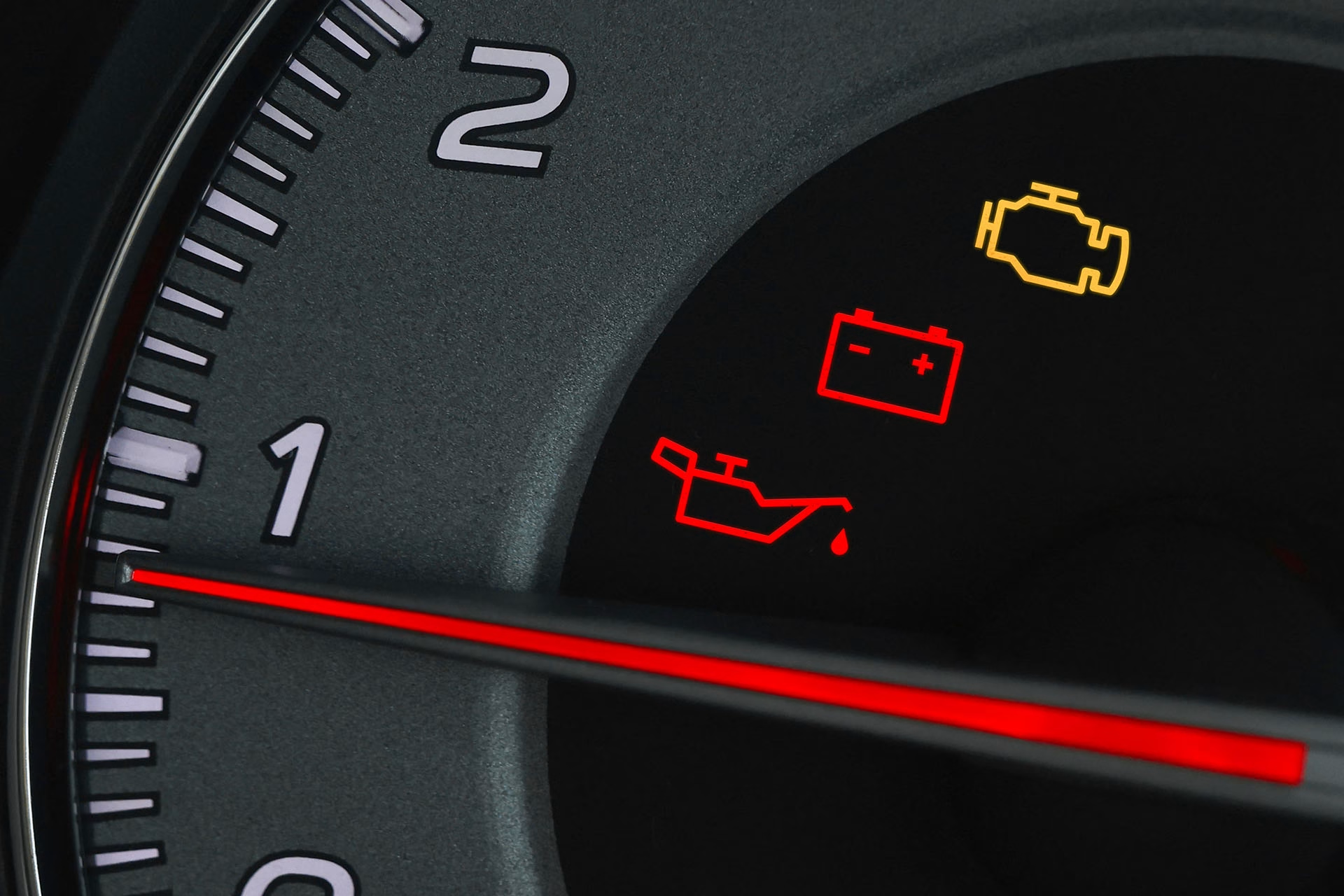
Quick Reference: What Color Means What
Before we get into the details, here’s the short version:
| Light Color | What It Means | What You Should Do |
|---|---|---|
| 🔴 Red | Serious — potential damage or safety risk | Pull over or address immediately |
| 🟡 Yellow / Amber | Caution — something needs attention | Schedule service soon |
| 🟢 Green | System is active and working normally | Nothing — you’re good |
| 🔵 Blue | Informational (e.g., high beams on) | Nothing — just FYI |
Think of it like a stoplight for your car’s health. Red means stop. Yellow means slow down and pay attention.
The Red Ones: Don’t Mess Around
Red lights are your car’s way of waving both arms at you. These deserve immediate attention — as in, pull over when it’s safe to do so and figure out what’s going on before driving further.
🌡️ Engine Temperature Warning
Looks like: a thermometer dipping into water
Your engine is overheating. Continuing to drive can cause serious, expensive damage — warped cylinder heads, blown head gaskets, and worse.
What to do:
- Pull over safely and turn off the engine
- Let it cool for at least 15–20 minutes before checking anything
- Check the coolant level in the reservoir once it’s cool
- Do NOT open the radiator cap while the engine is hot — pressurized coolant can spray and cause burns
- If coolant is fine and the light comes back on, call for a tow
🛢️ Oil Pressure Warning
Looks like: an old-fashioned oil can with a drop coming out of the spout
Low oil pressure means your engine isn’t getting the lubrication it needs. Metal-on-metal contact at high speed causes damage fast.
What to do:
- Pull over and turn off the engine
- Check your oil level with the dipstick
- If oil is low, add the correct type and check for leaks
- If oil level is fine and the light stays on, don’t keep driving — something else is wrong
🔋 Battery Warning
Looks like: a battery with a plus and minus symbol
Something in your charging system isn’t right. Could be the alternator, a bad connection, or the battery itself going bad.
What to do:
- You may have enough power to get somewhere nearby — don’t push it
- Turn off non-essential accessories (seat heaters, extra lights) to conserve power
- Get the charging system tested — most auto parts stores do this for free
🛑 Brake System Warning
Looks like: an exclamation point inside a circle, sometimes with “BRAKE” text
⚠️ If this light comes on while you’re driving (not just because your parking brake is engaged), treat it as an emergency. Brake failure is not something to gamble with.
What to do:
- Test your brakes gently — do they feel soft, spongy, or unresponsive?
- If braking feels off at all, pull over immediately
- If brakes feel normal, it may be a sensor issue — still get it checked that day
The Yellow Ones: Attention Required
Yellow or amber lights are the “hey, when you get a chance” category — but don’t let that fool you into putting it off for months.
🔧 Check Engine Light
Looks like: the silhouette of an engine
The infamous one. It can mean roughly a thousand different things — from a loose gas cap to a failing catalytic converter. Here’s how to read the situation:
| Check Engine Light Behavior | What It Likely Means | Urgency |
|---|---|---|
| Solid, no other symptoms | Minor issue or system fault | Schedule service within a week or two |
| Solid + rough running / poor power | Moderate fault affecting performance | Schedule service soon |
| Flashing / blinking | Active engine misfires occurring | Get it checked quickly — driving can damage the catalytic converter |
The only way to know what’s triggering it is a diagnostic scan. Most auto parts stores will scan it for free, or your dealer can run a full diagnostic.
🔘 TPMS — Tire Pressure Monitoring System
Looks like: a cross-section of a tire with an exclamation point
One or more tires is at least 25% below the recommended pressure. In colder weather, this one shows up constantly — cold air is denser and drops tire pressure.
What to do:
- Check all four tires with a gauge (don’t just eyeball it)
- Find your recommended PSI on the sticker inside the driver’s door jamb — not on the tire sidewall
- Add air as needed; the light should reset on its own after driving a few miles
- If the light stays on after inflating, you may have a slow leak worth investigating
⚡ Traction Control / Stability Control
Looks like: a car with wavy lines underneath it
- Flashing while driving: Normal — the system is actively working to keep you stable. Ease off the gas.
- Solid and staying on: The system has been disabled or there’s a fault. Worth having checked.
⛽ Low Fuel
You know this one. A few things worth knowing though:
- Most modern cars can go 30–50 miles past the warning light, but it varies a lot by vehicle and driving conditions
- Repeatedly running the tank very low can pull sediment and debris from the bottom of the tank into your fuel system
- It also puts extra strain on the fuel pump, which relies on fuel to stay cool
🔩 Service Due / Maintenance Required
Not a fault — just a reminder that you’re due for an oil change or other scheduled maintenance based on mileage or time elapsed.
Common triggers:
- Oil change interval reached
- Tire rotation due
- Multi-point inspection interval
- Cabin air filter or engine air filter service
It won’t cause immediate damage, but don’t let it sit too long.
A Few Newer Ones You Might Not Recognize
Modern vehicles are packed with driver assistance technology, and all of it has its own set of warning lights.
| Warning Light | What It Monitors | Common Cause When It Comes On |
|---|---|---|
| Lane Departure Warning | Camera tracking lane markings | Camera fault, dirty windshield, or system turned off |
| Forward Collision Warning / AEB | Radar/camera watching for obstacles ahead | Blocked sensor, dirty camera, or system fault |
| Blind Spot Monitoring | Radar in rear bumper corners | Dirty bumper cover, sensor fault |
| Adaptive Cruise Control | Radar-based following distance | Blocked radar sensor (snow, ice, bug splatter) |
| EV / Hybrid Battery | High-voltage battery pack | Serious — get it checked right away |
A lot of these sensor-based warnings clear up with a simple cleaning. Snow packed into a front bumper opening, a bug-splattered camera lens, or road grime on a radar sensor can all trigger false alerts. Give your front bumper, rear bumper corners, and windshield area a good wipe-down before assuming something is broken.
The Bottom Line
Your car’s warning lights are there for a reason, and modern vehicles are genuinely pretty good at telling you what’s wrong — you just have to listen.
The simple version:
- 🔴 Red light = Stop and address it now. Don’t keep driving and hope for the best.
- 🟡 Yellow light = Don’t ignore it. Schedule service within a reasonable timeframe.
- Flashing anything = More urgent than solid. Get it looked at sooner.
When in doubt, bring it in. A 15-minute appointment to check a warning light is always cheaper than the repair you’ll need if you ignore it long enough.
Frequently Asked Questions
Can I drive with the check engine light on?
It depends. If the light is solid and the car is running normally, you can usually drive it to a shop within a day or two without causing additional damage. If the light is flashing, or if you notice rough idling, loss of power, or strange smells, don’t put it off — active misfires can destroy a catalytic converter quickly, and that’s an expensive repair.
How do I reset a warning light?
Most warning lights will turn off on their own once the underlying issue is fixed. If a light stays on after you’ve addressed the problem — like the TPMS light after inflating your tires — driving for a few miles usually resets it. Some lights require a dealer or shop to clear the code with a diagnostic tool. Disconnecting the battery to reset lights is an old trick, but it clears all your stored codes and settings and doesn’t fix anything, so it’s not recommended.
What does it mean if multiple warning lights come on at once?
This often happens when the battery is weak or dying, or right after a jump start. If several unrelated lights come on at the same time, start by having your battery and charging system tested before assuming there are multiple problems. A low-voltage condition can trigger all kinds of false warnings.
Is it safe to drive with the TPMS light on?
If your tires are just slightly low, yes — carefully and not for long. But if a tire is significantly underinflated, handling and braking are compromised and you’re at risk of a blowout. Check the pressure before continuing to drive, especially at highway speeds.
Why did my warning light come on and then go off by itself?
Intermittent lights usually mean an intermittent problem — something that’s starting to fail but hasn’t fully failed yet. Don’t let the “it fixed itself” feeling talk you out of getting it looked at. The code is often still stored in the car’s computer even after the light goes out, and a shop can pull it and tell you what triggered it.
References
- NHTSA (National Highway Traffic Safety Administration) — nhtsa.gov, for anything safety-related like brake system standards or TPMS requirements
- Your vehicle’s owner’s manual — a general callout encouraging readers to check their specific make/model, since light appearances and meanings can vary
- AAA — aaa.com has well-cited consumer automotive guides on warning lights and roadside situations
- SAE International — the engineering standards body behind a lot of the specs automakers follow
- OBD-II diagnostic standard info — relevant for the check engine light section, since that system is federally standardized