Look, we’ve all been there. Life gets busy, the weather isn’t cooperating, and the list of things you need to get done feels never-ending.
Skipping a car wash here and there feels harmless — it’s just dirt, right?
But the truth is, neglecting your car’s exterior (and interior) over time adds up to some very real and very expensive damage.
Whether you’re driving a brand-new vehicle off the lot or a trusty older model with 150,000 miles on it, what’s living on the outside of your car matters a lot more than most people realize.
Let’s break it down season by season and talk about what’s actually happening to your paint, metal, glass, and rubber every time you decide to let Mother Nature handle the washing duties.
In This Post
- It’s Not Just Dirt — Here’s What’s Actually On Your Car
- Season by Season: What Skipping Washes Actually Costs You
- Seasonal Wash Priority Reference
- New vs. Older Vehicles: Does It Matter?
- New vs. Older Vehicle: Damage Risk Comparison
- What Happens Inside When You Skip Washes, Too
- The Real Cost of Skipping Washes
- Simple Habits That Make a Big Difference
- Bottom Line
It’s Not Just Dirt — Here’s What’s Actually On Your Car
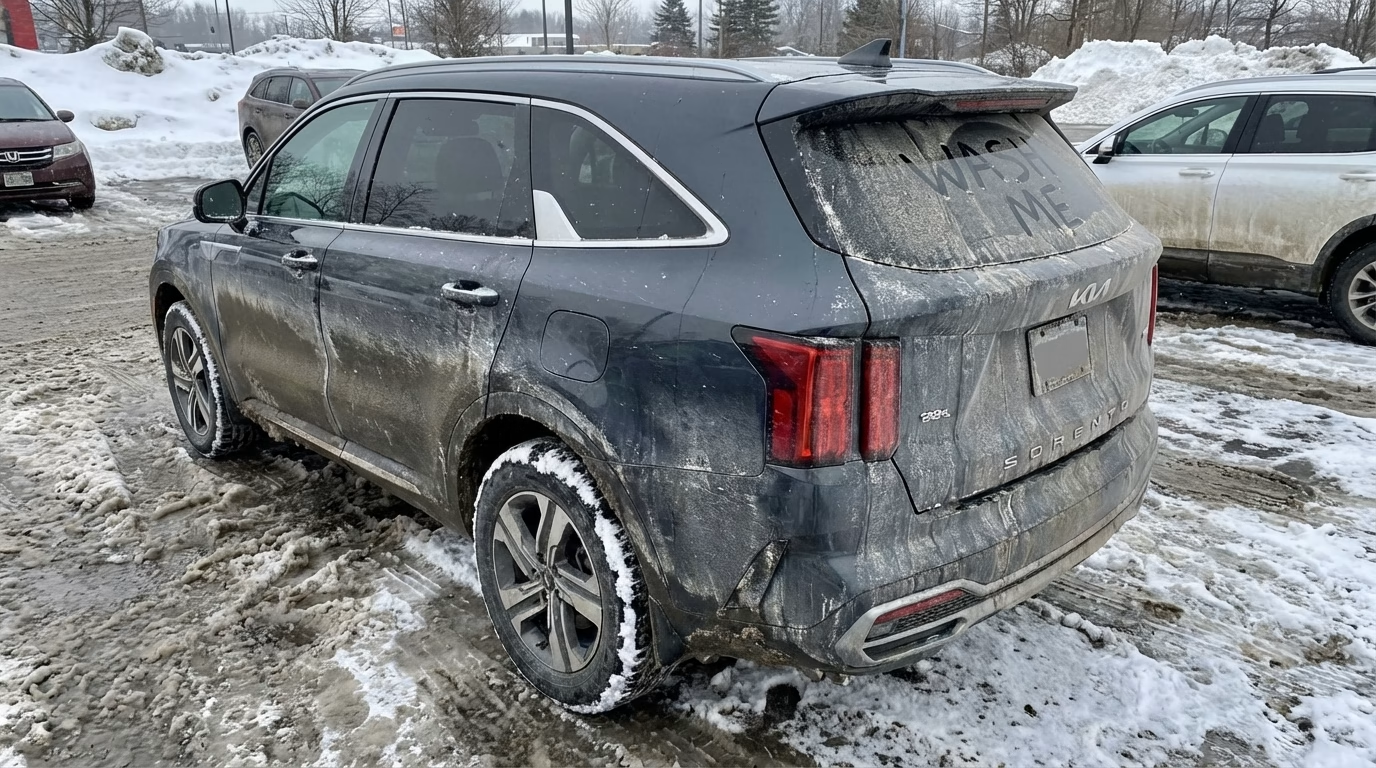
When you look at a dirty car, your brain probably registers “dust” or “mud.” But the stuff coating your vehicle is a complex cocktail of contaminants, and each one has its own way of doing damage over time.
- Road salt and de-icing chemicals — highly corrosive, especially to metal and painted surfaces
- Bird droppings — acidic and surprisingly fast-acting on clear coat
- Tree sap and pollen — sticky, penetrating, and chemically damaging
- Industrial fallout and brake dust — fine metallic particles that bond to paint and embed over time
- Insect splatter — acidic fluids that etch into clear coat if left for more than a few days
- UV rays and oxidation — not a “dirt” issue, but washing and waxing protect against these too
- Road grime and exhaust residue — oily, clingy, and accelerates surface degradation
The longer any of these sit on your vehicle, the deeper they work their way into the layers of your paint — and once they get past the clear coat, the damage becomes permanent without professional intervention.
Season by Season: What Skipping Washes Actually Costs You
Winter: The Most Dangerous Season for Your Car’s Body
Winter is, without a doubt, the harshest season for your vehicle’s exterior — and it’s the time most people skip washes because, honestly, it just seems pointless when there’s more snow coming.
But here’s the problem: road salt is relentlessly corrosive. Municipalities use salt and chemical de-icers to keep roads safe, and those compounds are incredibly effective at speeding up rust and corrosion on metal surfaces, frame components, brake lines, and anything else underneath your vehicle.
What’s building up on your car during winter:
- Road salt and calcium chloride de-icers (highly corrosive to metal)
- Sand and grit (abrasive to paint)
- Slushy mud packed into wheel wells and undercarriage
- Chemical runoff from roads and parking lots
The undercarriage is where winter damage really hides. You may not see it, but salt is clinging to your frame, suspension components, and exhaust system every single time you drive. This is why regular undercarriage rinses in winter are so important — it’s not just about how the car looks.
Recommended winter wash frequency: Every 1–2 weeks, more often if you’re driving in heavy salt conditions. Always focus on the undercarriage.
Spring: Pollen, Rain, and a False Sense of Security
A lot of people think a rainy spring means they don’t need to wash their car. Rain feels like a free wash, but it’s actually the opposite. Rainwater contains dissolved pollutants, and as it evaporates off your car’s surface, it leaves those contaminants behind — sometimes in the form of water spots that can etch into clear coat.
Spring also brings pollen season, and pollen is not as innocent as it looks. That yellow film coating your car is mildly acidic, and if it gets wet and then dries repeatedly, it can work its way into paint scratches and crevices. Combine that with tree sap, which drips heavily in spring, and you’ve got a recipe for bonded surface contamination that won’t come off with a simple rinse.
What’s building up on your car in spring:
- Pollen (acidic and paint-penetrating when wet)
- Tree sap (bonds to paint within days)
- Acidic rain residue and water spots
- Mud and organic debris from thawing ground
Recommended spring wash frequency: Every 1–2 weeks, with extra attention to the roof and hood where sap and pollen collect most.
Summer: Sun, Heat, and UV Damage
Summer seems like the easiest season on your car — no salt, lighter rain in many regions — but the sun is not your paint’s friend. UV rays break down clear coat over time, and heat accelerates the damage done by any contaminants sitting on the surface.
Think about what happens when a bird drops a “gift” on your hood in July. In the summer heat, the uric acid in bird droppings can begin etching your clear coat within 24–48 hours. Same goes for insect splatter on your front bumper and hood — the proteins and fluids in bug remains are acidic and heat-activated.
Summer also means more road trips, more bugs, more tar from freshly paved roads, and more opportunities for damage to accumulate.
What’s building up on your car in summer:
- Bird droppings (fast-acting acid damage in heat)
- Insect splatter (acidic, heat-activated)
- Road tar from fresh asphalt
- UV-accelerated oxidation of clear coat
- Waterline spots from swimming/lake trips if applicable
Recommended summer wash frequency: Every 1–2 weeks, and spot-clean bird droppings and bug splatter as quickly as possible — don’t wait for your next full wash.
Fall: Leaves, Moisture, and the Bridge to Winter
Fall tends to be overlooked in the car care conversation, but it comes with its own set of hazards. Wet leaves are particularly problematic — they cling to your hood, roof, and windshield and can hold moisture against the paint for extended periods. That sustained moisture promotes oxidation and, on older vehicles, can accelerate rust in areas where paint has already chipped or thinned.
Fall is also the time when municipalities begin road treatment before winter hits, so early-season salt applications can catch you off guard.
What’s building up on your car in fall:
- Wet leaves holding moisture against painted surfaces
- Early road salt applications
- Tree sap (another active period for many species)
- Rain and mud accumulation
Recommended fall wash frequency: Every 1–2 weeks, and pay attention to clearing leaf buildup from your hood, roof, and particularly from the cowl area near your windshield where water can pool and cause hidden damage.
Seasonal Wash Priority Reference
| Season | Top Threat | Priority Area | Wash Frequency |
|---|---|---|---|
| Winter | Road salt / de-icers | Undercarriage, wheel wells | Every 1–2 weeks (min) |
| Spring | Pollen / tree sap / acid rain | Roof, hood, horizontal surfaces | Every 1–2 weeks |
| Summer | Bird droppings / bug splatter / UV | Hood, bumper, roof | Every 1–2 weeks; spot-clean ASAP |
| Fall | Wet leaves / early salt / moisture | All surfaces, cowl area | Every 1–2 weeks |
New vs. Older Vehicles: Does It Matter?
Yes — and in some ways, the dynamics flip in ways you might not expect.
New Vehicles (0–5 Years Old)
New cars have fresh, thick clear coat that provides excellent protection — but that doesn’t mean they’re invincible. In fact, new paint is more vulnerable in one specific way: it’s still curing.
Most automotive paint continues to harden and fully cure for the first 30–90 days after application. During this window, harsh chemicals, abrasive dirt, and even improper washing techniques can cause damage that wouldn’t affect fully cured paint. This is one reason why new car owners should be especially careful about the type of car wash they use in those first few months.
Key concerns for new vehicles:
- Clear coat still curing in the first 30–90 days
- Dealer-applied paint sealants and coatings need maintenance to stay effective
- Water spots and light contamination are easier to remove now than later — don’t let them build up
- Warranty implications: neglect-related paint damage is typically not covered
- Paint correction on new cars is expensive and can affect resale value
Good news: New paint, when properly maintained, is very resilient. Regular washing and a good wax or sealant every 3–6 months will keep that factory finish looking great for years.
Older Vehicles (6+ Years)
Older vehicles face a different set of challenges. Years of UV exposure, washing, environmental contaminants, and general wear mean the clear coat is thinner and potentially compromised in spots. Rock chips, minor scratches, and areas where paint has thinned are entry points for moisture and corrosion.
For vehicles 10+ years old, rust is often the central concern — especially in regions like the Midwest where road salt use is heavy. Once rust takes hold under the paint or in the frame, it progresses quickly and can become a structural issue, not just a cosmetic one.
Key concerns for older vehicles:
- Thinning clear coat is more susceptible to UV damage and contamination
- Existing chips and scratches are entry points for moisture and rust
- Surface rust spreads — catching it early matters
- Salt damage accumulates in hidden areas (frame, suspension, brake lines)
- Resale value drops significantly with obvious neglect or rust
The takeaway: Regular washing is arguably more important for older vehicles, not less. It’s your first line of defense against the rust and deterioration that will eventually sideline the vehicle.
New vs. Older Vehicle: Damage Risk Comparison
| Risk Factor | New Vehicle (0–5 yrs) | Older Vehicle (6+ yrs) |
|---|---|---|
| Clear coat vulnerability | Moderate (still curing early on) | High (thinning, worn) |
| Rust risk | Low (but grows without maintenance) | High (especially in salt regions) |
| Bird dropping / bug damage | Moderate | High |
| UV oxidation risk | Low-moderate | High |
| Recovery options | Paint correction, polish, re-coat | More limited; may need respray |
| Cost of neglect | Moderate ($200–$1,000+ for correction) | High ($500–$5,000+ for rust repair) |
What Happens Inside When You Skip Washes, Too
Most people focus on the exterior, but the interior takes a beating from neglect as well.
- Dirt and grit act as abrasives on your seats, carpet, and floor mats — they grind into fabric and leather with every movement
- Food and drink spills left unaddressed breed bacteria, mold, and odors that are extremely difficult to fully remediate later
- Leather dries and cracks without conditioning — UV exposure through glass accelerates this
- Dust buildup in vents and on dashboards degrades air quality and can affect HVAC performance over time
- Salt and sand tracked in during winter corrodes floor pan areas and accelerates rust from the inside out on older vehicles
The Real Cost of Skipping Washes
Here’s a straightforward way to look at the financial reality:
| Scenario | Typical Cost |
|---|---|
| Regular car wash (monthly) | $15–$30/month ($180–$360/year) |
| Paint decontamination detail | $150–$400 |
| Paint correction (swirls, etch marks) | $300–$1,500 |
| Spot rust treatment (early stage) | $100–$500 per panel |
| Full panel repaint (rust damage) | $500–$1,500 per panel |
| Frame rust repair | $1,000–$5,000+ |
| Interior mold/odor remediation | $200–$800 |
The math isn’t subtle. A few hundred dollars a year on regular washes can prevent thousands in repairs down the road.
Simple Habits That Make a Big Difference
You don’t need to become obsessive about car care to protect your investment. A few consistent habits go a long way:
- Wash every 1–2 weeks as a baseline, more often in winter or after heavy exposure to salt, pollen, or bugs
- Address bird droppings and bug splatter immediately — don’t wait for your next scheduled wash
- Use a touchless or hand wash when possible to avoid swirl marks from automatic brush systems
- Get an undercarriage rinse every wash during winter months
- Wax or apply a paint sealant 2–4 times per year to protect clear coat from UV and contamination
- Check for and touch up chips before they become rust entry points
- Clean your interior monthly and condition leather every 3–6 months
Bottom Line
Your car is almost certainly one of the most significant investments you own, and the exterior is its first line of defense against a relentless assault from the environment. A dirty car isn’t just embarrassing in the grocery store parking lot — it’s actively getting damaged. Salt is corroding. Acid is etching. UV is oxidizing. And every week you let it go is another week those processes run unchecked.
Whether you’re driving a shiny new model or a well-loved older vehicle, regular washing isn’t a luxury — it’s maintenance. And like most maintenance, it’s a whole lot cheaper to do it consistently than to deal with the consequences of skipping it.
Ready to give your vehicle the care it deserves? Stop by H+H Shine Shop — we can give your car that showroom shine both inside and out.