A comprehensive guide to finding the right midsize pickup for your needs
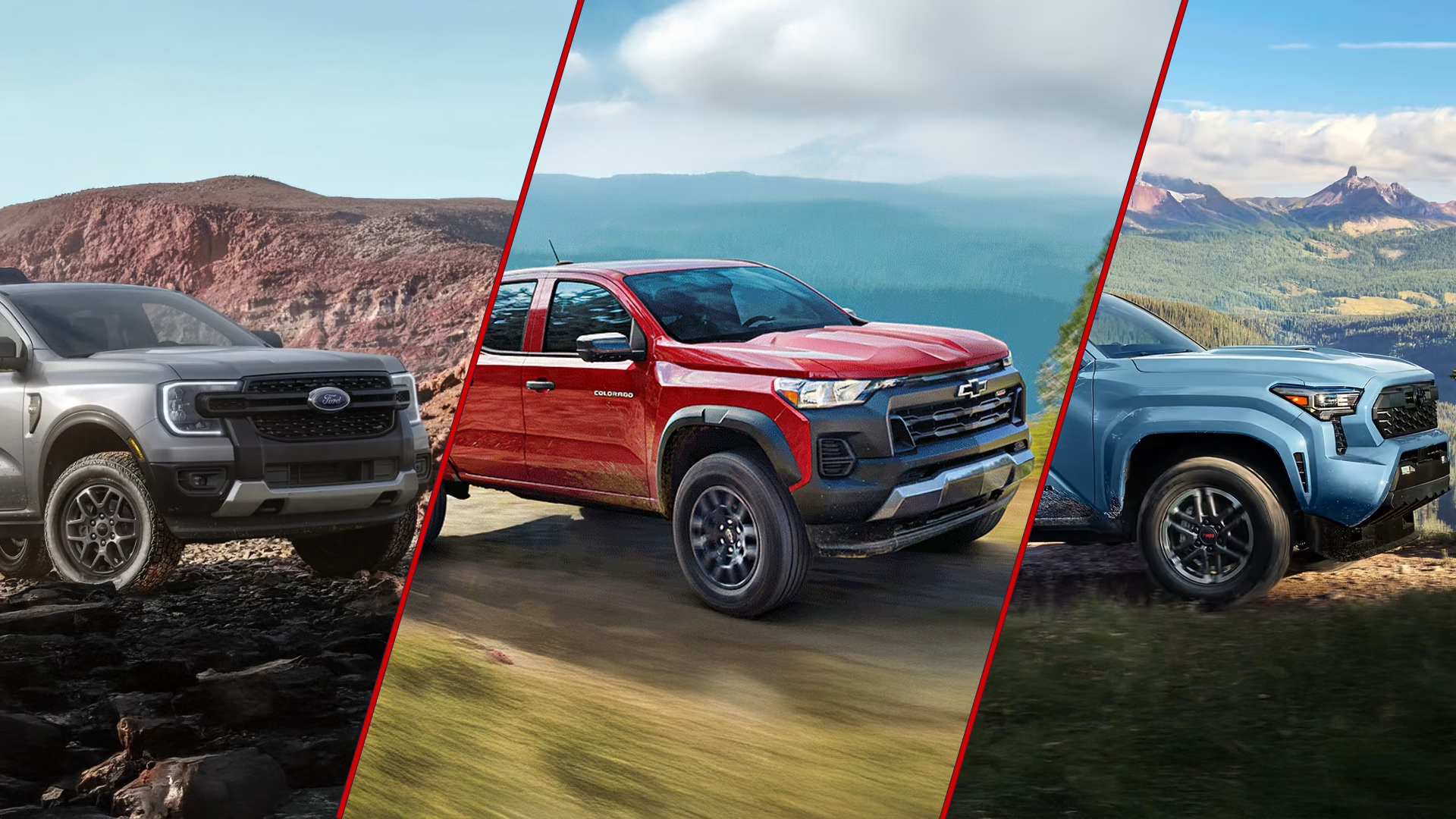
If you’re in the market for a midsize pickup in 2026, you’ve got some genuinely solid options to consider.
The segment has never been more competitive, and manufacturers are packing these trucks with features that would’ve been reserved for full-size models just a few years ago.
Gone are the days when “midsize” meant “compromise”—today’s trucks in this class can tow serious weight, navigate challenging terrain, and still fit comfortably in your garage.
We’ve put together this comprehensive comparison to help you sort through the noise and figure out which truck actually makes sense for your needs.
We’ll cover everything from raw performance numbers to real-world livability, so you can make an informed decision.
In This Post
- The Contenders at a Glance
- Power and Performance: Who Actually Delivers?
- Towing and Hauling: The Numbers That Matter
- Fuel Economy: What to Expect at the Pump
- Cab and Bed Configurations: Finding the Right Fit
- Interior Quality and Comfort
- Technology and Infotainment
- Safety Features and Ratings
- Off-Road Capability: Trail-Ready Trims Compared
- Warranty and Long-Term Ownership
- Trim Level Breakdown: Finding Your Price Point
- The Bottom Line: Which Truck Makes Sense?
- Ready to See for Yourself?
The Contenders at a Glance
Before we dive deep into each category, here’s a quick snapshot of how the major players stack up on paper:
| Truck | Starting MSRP | Horsepower | Torque (lb-ft) | Max Towing | Max Payload |
|---|---|---|---|---|---|
| Chevy Colorado | $32,400 | 310 | 430 | 7,700 lbs | 1,684 lbs |
| Toyota Tacoma | $32,245 | 228–278* | 243–317* | 6,500 lbs | 1,705 lbs |
| GMC Canyon | $44,790 | 310 | 430 | 7,700 lbs | 1,803 lbs |
| Ford Ranger | $33,350 | 270–315** | 310–400** | 7,500 lbs | 1,805 lbs |
| Nissan Frontier | $33,550 | 310 | 281 | 7,150 lbs | 1,590 lbs |
| Honda Ridgeline | $40,595 | 280 | 262 | 5,000 lbs | 1,583 lbs |
*Tacoma base engine (SR trim) is 228 hp/243 lb-ft; SR5 and higher trims offer 278 hp/317 lb-ft; i-FORCE MAX hybrid reaches 326 hp/465 lb-ft
**Ranger base 2.3L EcoBoost is 270 hp/310 lb-ft; optional 2.7L V6 offers 315 hp/400 lb-ft; Raptor gets 405 hp/430 lb-ft
Numbers only tell part of the story, though. Let’s break down what these specs actually mean in the real world.
Power and Performance: Who Actually Delivers?
The Engine Lineup
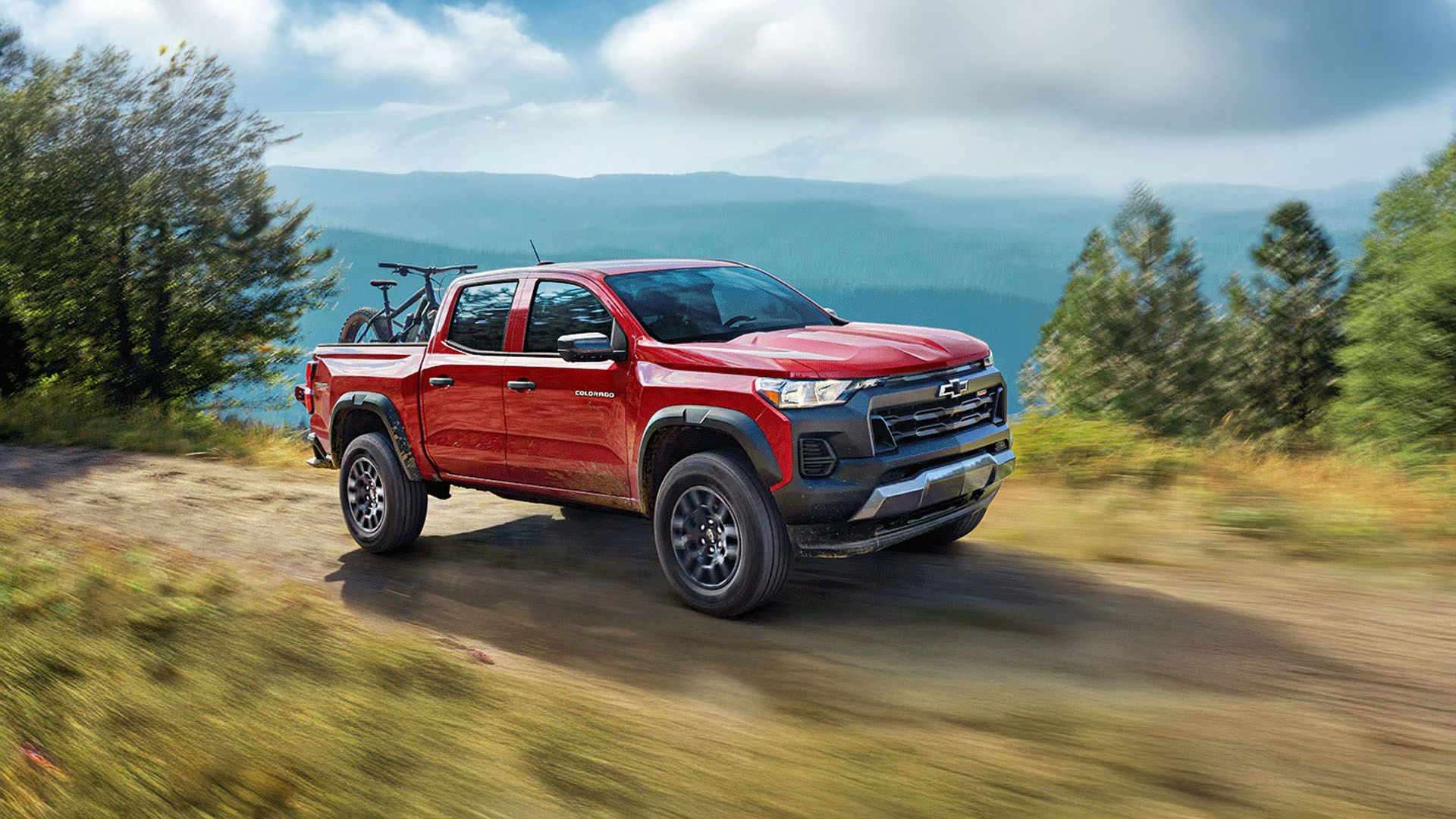
2026 Chevy Colorado: One Engine, No Compromises
The Colorado takes a refreshingly simple approach to powertrains: every single trim level—from the base Work Truck to the trail-conquering ZR2—comes standard with the same 2.7L TurboMax turbocharged four-cylinder engine. This unit produces 310 horsepower and an impressive 430 lb-ft of torque, paired exclusively with an 8-speed automatic transmission.
What does this mean for buyers? You’re not forced to pay thousands extra to get “the good engine.” Whether you’re spending $32,400 on a Work Truck or $50,500 on a ZR2, you’re getting identical power output. That 430 lb-ft of torque—the highest standard figure in the class—means confident acceleration when merging onto highways, strong performance when the bed is loaded, and capable towing without feeling strained.
In testing, the Colorado LT 4WD has hit 60 mph in around 6.0 seconds—quick for a midsize truck and competitive with some performance sedans from just a decade ago.
Toyota Tacoma: A Tiered Approach
Toyota takes a different strategy with the Tacoma, offering multiple power levels depending on how much you’re willing to spend:
- SR trim: 2.4L turbocharged four-cylinder making 228 hp and 243 lb-ft of torque
- SR5 and higher: Same engine, tuned to 278 hp and 317 lb-ft
- i-FORCE MAX hybrid (select trims): 2.4L turbo plus electric motor for 326 hp and 465 lb-ft
The base SR’s 228 horsepower feels adequate around town but noticeably strained when towing or hauling heavy loads. The 278-hp version in higher trims is more confident, but you’ll need to move to the $40,000+ range to get the hybrid’s full capability.
Toyota does offer something unique: a 6-speed manual transmission on select gas-powered trims. For driving enthusiasts who miss the engagement of rowing their own gears, this is a genuine differentiator—though it does drop output slightly to 270 hp and 310 lb-ft.
Ford Ranger: Good Base, Better Upgrade
The Ranger’s standard 2.3L EcoBoost four-cylinder produces 270 horsepower and 310 lb-ft of torque—perfectly adequate for daily driving and light-duty work. It’s paired with a 10-speed automatic that generally does a good job keeping the turbo in its power band.
However, the optional 2.7L twin-turbocharged V6 is where things get interesting: 315 hp and 400 lb-ft of torque put it near the top of the class. The catch? This upgrade costs between $5,795 (on Lariat) and $7,545 (on XLT), and it’s only available with four-wheel drive. If you want a two-wheel-drive Ranger, you’re stuck with the base engine.
The Ranger Raptor sits in its own category with a 3.0L twin-turbo V6 making 405 hp and 430 lb-ft—but at $57,070, it’s playing in a different price bracket entirely.
Nissan Frontier: V6 Standard, Torque Lacking
The Frontier is the only truck here that still offers a traditional V6 engine across the board. The 3.8-liter naturally aspirated six-cylinder makes 310 horsepower—matching the Colorado—and comes paired with a smooth 9-speed automatic transmission.
The downside? Just 281 lb-ft of torque, which is noticeably behind the turbocharged competition when you need low-end grunt for towing or hauling. The Frontier’s V6 needs to rev higher to access its power, which can make it feel less effortless under load.
That said, there’s something to be said for the proven reliability of a naturally aspirated engine. No turbochargers means fewer potential failure points and potentially lower maintenance costs over time.
GMC Canyon: Colorado’s Upscale Twin
The Canyon shares the Colorado’s 2.7L TurboMax engine exactly—310 hp, 430 lb-ft, 8-speed automatic. The mechanical bits are identical, so performance is equivalent.
The difference is positioning. GMC markets the Canyon as a more premium offering, with nicer interior materials, different styling, and a higher price floor. Whether that premium is worth $12,000+ over a comparably-equipped Colorado is a personal decision.
Honda Ridgeline: Comfort Over Capability
The Ridgeline’s 3.5L V6 produces 280 horsepower and 262 lb-ft of torque—the lowest figures in this comparison. Paired with a 9-speed automatic and standard all-wheel drive, it reaches 60 mph in about 6.2 seconds, which is respectable.
However, the Ridgeline isn’t really designed to compete on power specs. Its unibody construction (shared with the Honda Pilot SUV) prioritizes ride comfort and on-road manners over raw capability. If your primary use is commuting with occasional Home Depot runs, it’s genuinely pleasant. If you need serious work truck capability, it’s not the right tool.
The Torque Advantage
For truck buyers, torque often matters more than horsepower—especially if you’re regularly towing or hauling heavy loads. Here’s how they compare:
| Truck | Standard Torque | Notes |
|---|---|---|
| Chevy Colorado | 430 lb-ft | Standard on all trims |
| GMC Canyon | 430 lb-ft | Standard on all trims |
| Ford Ranger (V6) | 400 lb-ft | Requires $5,700+ upgrade |
| Toyota Tacoma (hybrid) | 465 lb-ft | Limited to select high trims |
| Toyota Tacoma (gas) | 317 lb-ft | Higher trims only |
| Nissan Frontier | 281 lb-ft | Standard, but notably lower |
| Honda Ridgeline | 262 lb-ft | Standard |
The Colorado’s 430 lb-ft available at the base price point is difficult to match. The Tacoma hybrid exceeds it at 465 lb-ft, but you’ll pay significantly more to get there. The Ranger can approach it with the V6 upgrade, but again—that’s extra money and mandatory 4WD.
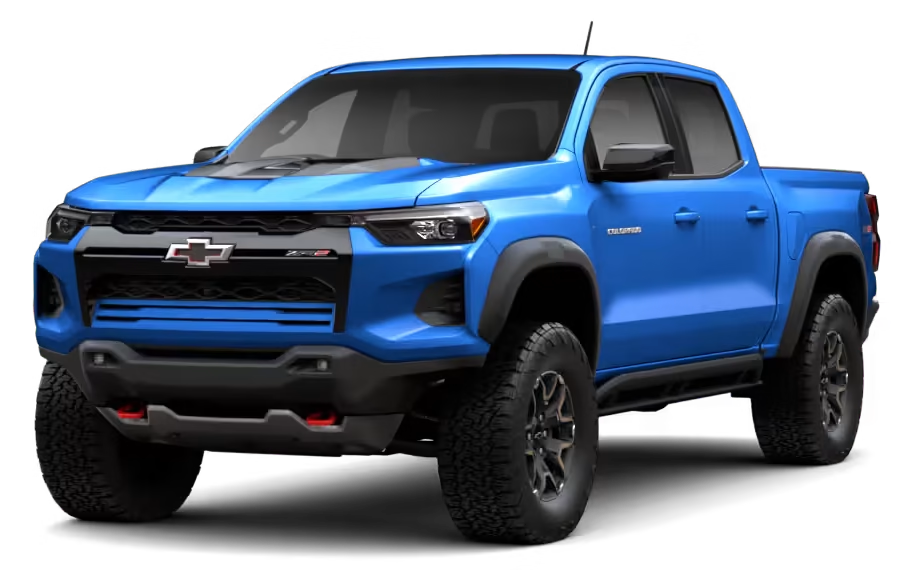
View Our Current Colorado Inventory!
Towing and Hauling: The Numbers That Matter
If you’re planning to tow boats, campers, utility trailers, or work equipment regularly, this section is probably your most important consideration.
Maximum Towing Capacity
| Truck | Max Towing | Notes |
|---|---|---|
| Chevy Colorado | 7,700 lbs | Requires Trailering Package |
| GMC Canyon | 7,700 lbs | Standard on most trims |
| Ford Ranger | 7,500 lbs | Requires Trailer Tow Package |
| Nissan Frontier | 7,150 lbs | King Cab 4×2 configuration |
| Toyota Tacoma | 6,500 lbs | XtraCab achieves max; Double Cab is 6,400 lbs |
| Honda Ridgeline | 5,000 lbs | All configurations |
What do these numbers mean in practice?
That 1,200-pound difference between the Colorado (7,700 lbs) and Tacoma (6,500 lbs) might not sound dramatic on paper, but in the real world, it’s significant:
- A typical 24-foot travel trailer weighs 4,500–6,500 lbs
- A 20-foot boat with trailer runs 3,500–5,500 lbs
- A dual-axle car hauler with a small car can exceed 5,000 lbs
With the Colorado, you’ve got comfortable margin for a mid-size travel trailer plus gear and passengers. With the Tacoma, you’re pushing closer to the limit, which means more stress on the drivetrain, worse fuel economy while towing, and less margin for error.
The Ridgeline’s 5,000-pound cap is where its unibody construction becomes limiting. It’s fine for small utility trailers, jet skis, or a pair of ATVs—but a proper camping trailer or boat is likely beyond comfortable capability.
Maximum Payload Capacity
Payload (what you can carry in the cab and bed combined) matters for work use, hauling materials, and weekend projects:
| Truck | Max Payload | Notes |
|---|---|---|
| Ford Ranger | 1,805 lbs | Best in class |
| GMC Canyon | 1,803 lbs | Close second |
| Toyota Tacoma | 1,705 lbs | Competitive |
| Chevy Colorado | 1,684 lbs | Solid performer |
| Nissan Frontier | 1,590 lbs | Adequate for most needs |
| Honda Ridgeline | 1,583 lbs | Lower end |
The Ranger and Canyon lead here, but the differences are relatively small—we’re talking about 120 pounds between first and last among the body-on-frame trucks. All of these can handle a yard of mulch, a pallet of pavers, or a weekend’s worth of camping gear without issue.
Towing Technology
Modern trucks offer sophisticated tech to make towing easier and safer:
Chevy Colorado towing features:
- Hitch Guidance with Hitch View camera
- Available HD Surround Vision with up to 10 camera views
- Trailer sway control
- Integrated trailer brake controller (available)
- ProGrade Trailering app with trailer light test
Toyota Tacoma towing features:
- Trailer Backup Guide with Straight Path Assist
- Integrated brake controller (available)
- Blind Spot Monitor with trailer coverage
- Multi-Terrain Monitor for backing up
Ford Ranger towing features:
- Pro Trailer Backup Assist (uses knob to steer trailer)
- Trailer Reverse Guidance
- Smart Hitch with built-in scale
- 360-degree camera system (available)
Ford’s Pro Trailer Backup Assist is genuinely innovative—you turn a small knob to control trailer direction while the truck handles steering. It has a learning curve but makes backing into tight spaces dramatically easier for inexperienced trailer towers.
Fuel Economy: What to Expect at the Pump
Fuel costs add up over time, especially if this is a daily driver. Here’s how the trucks compare:
| Truck | City | Highway | Combined | Notes |
|---|---|---|---|---|
| Toyota Tacoma (2WD gas) | 21 | 26 | 23 | Best gas-powered economy |
| Toyota Tacoma (4WD gas) | 20 | 23 | 21 | Most common config |
| Toyota Tacoma (hybrid) | 22 | 24 | 23 | Hybrid adds power, not much efficiency |
| Ford Ranger (2.3L 2WD) | 21 | 26 | 23 | Base engine |
| Ford Ranger (2.7L V6) | 19 | 23 | 20 | Optional V6 |
| Honda Ridgeline | 18 | 24 | 21 | Consistent across trims |
| Nissan Frontier (4WD) | 17 | 21 | 19 | Thirstier V6 |
| Chevy Colorado (2WD) | 19 | 25 | 21 | Work Truck and LT |
| Chevy Colorado (4WD) | 17 | 22 | 19 | Most popular config |
| GMC Canyon | 17-19 | 21-23 | 19-20 | Varies by trim |
The Tacoma and base Ranger lead in fuel economy, particularly in 2WD configurations. The Colorado and Canyon’s turbocharged engines are thirstier—that’s the trade-off for their higher torque output.
In real-world highway driving, the Colorado has returned 22-25 mpg in various tests, which is competitive for a truck with 430 lb-ft of torque. During towing, expect all of these trucks to drop into the 12-16 mpg range depending on trailer size and terrain.
Cab and Bed Configurations: Finding the Right Fit
Not all trucks offer the same flexibility in terms of cab styles and bed lengths:
| Truck | Cab Options | Bed Options |
|---|---|---|
| Chevy Colorado | Crew Cab only | 5′ 2″ only |
| GMC Canyon | Crew Cab only | 5′ 2″ only |
| Toyota Tacoma | XtraCab (extended), Double Cab | 5′ or 6′ bed |
| Ford Ranger | Crew Cab only | 5′ only |
| Nissan Frontier | King Cab (extended), Crew Cab | 5′ or 6′ bed |
| Honda Ridgeline | Crew Cab only | 5′ 4″ only |
Important consideration: The Colorado, Canyon, and Ranger are all locked into a single configuration—crew cab with a roughly 5-foot bed. If you need a longer bed for specific cargo (8-foot lumber, for instance) or prefer an extended cab for more bed space, the Tacoma and Frontier are your only options here.
For most buyers, the crew cab/short bed combo makes sense—it maximizes interior passenger space while still providing a usable bed. But if your work requires frequently hauling longer materials, the 6-foot bed option on the Tacoma and Frontier could be a deciding factor.
Bed Features and Design
Chevy Colorado bed highlights:
- Available spray-in bedliner
- 120V outlet (available)
- LED lighting
- Bed tie-downs at multiple heights
- CornerStep rear bumper for bed access
- Available Multi-Flex tailgate with six configurations
Toyota Tacoma bed highlights:
- Composite bed material (dent and rust resistant)
- Deck rail system with adjustable tie-downs
- 120V outlet and 12V outlet (available)
- LED bed lighting
- Available tonneau cover integrated with bed management
Honda Ridgeline bed highlights:
- In-Bed Trunk: 7.3 cubic feet of lockable, weatherproof storage beneath bed floor
- Drainable trunk doubles as cooler
- Dual-action tailgate (swings down or opens sideways)
- 400W AC power outlet (available)
The Ridgeline’s In-Bed Trunk is genuinely unique and incredibly practical. You can store tools, groceries, or valuables below the bed floor, protected from weather and theft. It also has a drain plug, so you can fill it with ice for tailgating. No other truck here offers anything comparable.
Interior Quality and Comfort
Cabin Design and Materials
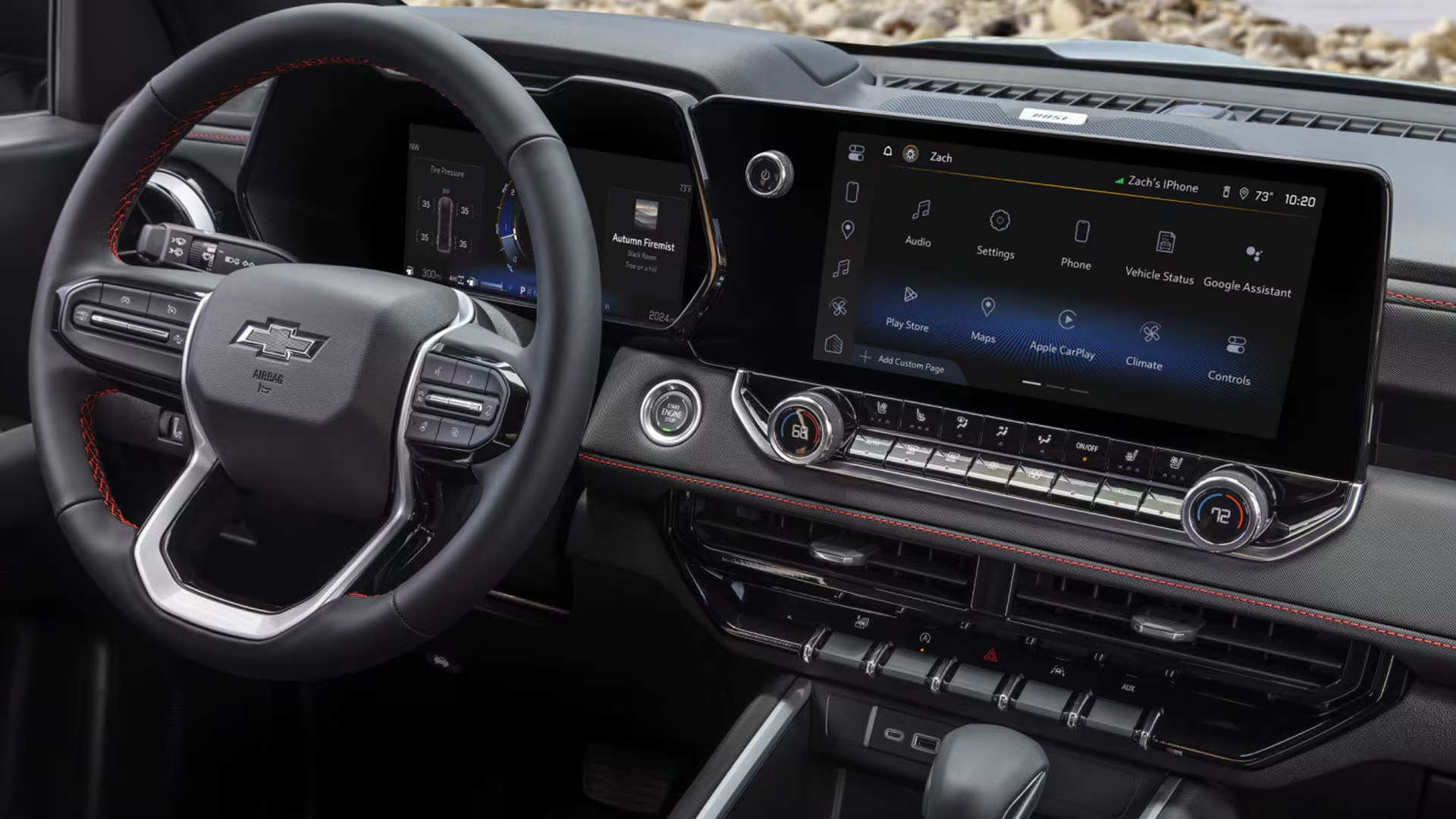
Chevy Colorado interior: The Colorado’s cabin received a significant upgrade with the current generation. Even base Work Truck models get an 11-inch digital gauge cluster and 11.3-inch infotainment touchscreen—screens that some competitors reserve for $45,000+ trims. Materials are appropriately durable without feeling cheap, with available leather-appointed seating on Z71 and ZR2 models.
The front seats are supportive enough for long drives, though the rear seat is admittedly tight on legroom. Adults can fit back there for shorter trips, but it’s best suited for kids or occasional passengers.
Toyota Tacoma interior: The redesigned Tacoma (introduced for 2024) brought major interior improvements. Higher trims feature a 12.3-inch digital gauge cluster and available 14-inch touchscreen—the largest in the segment. Build quality is solid, and Toyota’s reputation for durability extends to interior components.
The rear seat is similarly cramped to the Colorado’s, which is common in this segment. Storage is clever, though—rear seats flip up to reveal hidden compartments.
Ford Ranger interior: The Ranger’s cabin is well-organized and attractive, with a clear design language borrowed from larger Ford trucks. The 12-inch touchscreen (available) is responsive, and physical controls remain for common functions—you’re not forced to dig through menus to adjust climate settings.
Interior materials are competitive, though some testers have noted that the cabin feels more “car-like” than trucky, which may be a positive or negative depending on your preferences.
Nissan Frontier interior: The Frontier’s interior is functional but beginning to show its age compared to recently redesigned competitors. Materials are adequate, and the layout is intuitive, but it lacks the visual punch of the Colorado or Tacoma’s modern cabins.
That said, Nissan has been steadily improving. The available 12.3-inch touchscreen brings modern tech, and the Zero Gravity front seats are genuinely comfortable for long drives.
Honda Ridgeline interior: The Ridgeline’s cabin is the most car-like here—which makes sense given its SUV underpinnings. Ride comfort is excellent, noise isolation is superior to body-on-frame competitors, and the front seats are comfortable all day.
The downside? The dashboard design feels dated compared to newer competitors, and the overall vibe is more “Honda Pilot with a bed” than “proper truck.” Whether that’s a problem depends on your expectations.
Rear Seat Space Comparison
| Truck | Rear Legroom | Rear Headroom | Notes |
|---|---|---|---|
| Honda Ridgeline | 36.7″ | 37.5″ | Best in class |
| Nissan Frontier (Crew) | 33.5″ | 38.5″ | Competitive |
| Toyota Tacoma (Double) | 32.8″ | 38.3″ | Tight but usable |
| Chevy Colorado | 33.1″ | 38.1″ | Adequate |
| Ford Ranger | 33.0″ | 38.4″ | Similar to Colorado |
| GMC Canyon | 33.1″ | 38.1″ | Identical to Colorado |
The Ridgeline wins on passenger space, which makes sense—its unibody platform allows for a longer wheelbase relative to exterior dimensions. If you regularly carry adult passengers in the back, this could be a significant consideration.
Technology and Infotainment
Screen Sizes and Standard Tech
| Truck | Standard Gauge Cluster | Standard Touchscreen | Notes |
|---|---|---|---|
| Chevy Colorado | 11″ digital | 11.3″ | Standard on ALL trims |
| Toyota Tacoma (higher) | 12.3″ digital | 14″ available | Base gets 7″ + 8″ |
| Ford Ranger | 8″ digital | 10″ (12″ available) | Varies by trim |
| GMC Canyon | 11″ digital | 11.3″ | Standard on all trims |
| Nissan Frontier | 7″ digital | 9″ (12.3″ available) | Varies by trim |
| Honda Ridgeline | 7″ digital | 9″ | Standard across lineup |
The Colorado’s approach stands out: you get the full 11-inch gauge cluster and 11.3-inch touchscreen even on the base Work Truck. Competitors typically reserve their best displays for mid-to-high trims, meaning you either pay up or settle for smaller screens.
Connectivity Features
All trucks in this comparison offer:
- Apple CarPlay and Android Auto (wireless on most)
- Bluetooth streaming and hands-free calling
- USB-A and USB-C ports
- Available Wi-Fi hotspot
Audio system options:
| Truck | Standard Audio | Premium Option |
|---|---|---|
| Chevy Colorado | 6 speakers | Bose 7-speaker system |
| Toyota Tacoma | 6 speakers | JBL 10-speaker with portable Bluetooth speaker |
| Ford Ranger | 6 speakers | B&O 8-speaker system |
| Nissan Frontier | 6 speakers | Fender 10-speaker system |
| Honda Ridgeline | 7 speakers | 8-speaker system |
Safety Features and Ratings
Standard Safety Technology
| Feature | Colorado | Tacoma | Ranger | Frontier | Canyon | Ridgeline |
|---|---|---|---|---|---|---|
| Auto Emergency Braking | ✓ | ✓ | ✓* | ✓ | ✓ | ✓ |
| Forward Collision Warning | ✓ | ✓ | ✓* | ✓ | ✓ | ✓ |
| Lane Keep Assist | ✓ | ✓ | ✓* | ✓ | ✓ | ✓ |
| Lane Departure Warning | ✓ | ✓ | ✓* | ✓ | ✓ | ✓ |
| Blind Spot Monitoring | Avail. | ✓ | ✓* | ✓ | Avail. | ✓ |
| Rear Cross Traffic Alert | Avail. | ✓ | ✓* | ✓ | Avail. | ✓ |
| Adaptive Cruise Control | Avail. | Avail. | Avail. | Avail. | Avail. | ✓ |
*Standard on XLT and higher trims
Chevy Safety Assist comes standard on every Colorado trim and includes:
- Automatic Emergency Braking
- Front Pedestrian Braking
- Lane Keep Assist with Lane Departure Warning
- Forward Collision Alert
- Following Distance Indicator
- IntelliBeam (auto high beams)
Toyota Safety Sense 3.0 is standard on Tacoma and offers similar coverage with Toyota’s Proactive Driving Assist, which makes subtle steering and braking adjustments based on traffic flow.
Nissan Safety Shield 360 provides comprehensive coverage as standard equipment, including features like Rear Automatic Braking that some competitors only offer as options.
Crash Test Ratings
| Truck | NHTSA Overall | IIHS | Notes |
|---|---|---|---|
| Toyota Tacoma | 4 stars | Top Safety Pick (2025) | Strong performer |
| Honda Ridgeline | 5 stars | Good ratings | Best crash performance |
| Ford Ranger | 4 stars | Not fully tested | Limited IIHS data |
| Chevy Colorado | Not yet rated | Not fully tested | 2023 model rated 4 stars |
| Nissan Frontier | 4 stars | Acceptable front overlap | Showing age in tests |
The Ridgeline benefits here from its unibody construction, which allows for more sophisticated crumple zones than body-on-frame trucks typically achieve.
Off-Road Capability: Trail-Ready Trims Compared
Each manufacturer offers at least one off-road-focused variant. Here’s a detailed breakdown:
Off-Road Trim Specifications
| Feature | Colorado ZR2 | Colorado Trail Boss | Tacoma TRD Pro | Ranger Raptor | Frontier PRO-4X |
|---|---|---|---|---|---|
| Starting MSRP | $50,500 | $40,400 | $60,000+ | $57,070 | $42,370 |
| Suspension | Multimatic DSSV 3.0 | 2″ lifted off-road | Fox internal bypass | FOX Live Valve 2.5 | Bilstein off-road |
| Tires | 33″ Goodyear Wrangler | 32″ all-terrain | Goodyear Territory | BFGoodrich T/A KO2 | All-terrain |
| Ground Clearance | 10.7″ | 9.5″ | 9.4″ | 13.1″ | 9.4″ |
| Approach Angle | 38.3° | 30.5° | 33° | 33.1° | 32.3° |
| Front Differential | Electronic locking | Standard | Standard | Standard | Standard |
| Rear Differential | Electronic locking | Auto-locking | Electronic locking | Electronic locking | Electronic locking |
| Skid Plates | Full coverage | Yes | Yes | Full coverage | Steel |
| Rock Sliders | Standard | Not included | Optional | Standard | Not included |
The Value Play: Colorado Trail Boss
The Trail Boss deserves special attention for buyers who want genuine off-road capability without ZR2 pricing. For $40,400, you get:
- Factory 2-inch suspension lift
- 32-inch all-terrain tires
- Automatic locking rear differential
- Off-road suspension tuning
- Skid plates
- Red recovery hooks
- Off-road drive modes (Terrain, Off-Road, Baja)
This is real hardware—not just cosmetic badges on a standard truck. The Trail Boss can handle forest service roads, moderate trail work, and snowy conditions that would challenge a basic truck. And it does this while maintaining the full 7,700-pound towing capacity and keeping the price $10,000 below the ZR2.
For buyers who want weekend trail capability without paying for Multimatic dampers and 33-inch tires they may never fully utilize, it hits a sweet spot few competitors can match.
Extreme Off-Road: ZR2 vs. Competition
If serious off-roading is your priority, the Colorado ZR2 offers arguably the best capability-to-dollar ratio:
Why the ZR2 stands out:
- Multimatic DSSV (Dynamic Suspensions Spool Valve) dampers—the same technology used in trophy trucks and the Ford GT supercar
- 3.5 inches wider track than standard Colorado
- Front AND rear electronic locking differentials (many competitors only lock the rear)
- 33-inch tires with functional wheel flares
- Full underbody protection including transfer case and fuel tank skid plates
Tacoma TRD Pro comparison: The TRD Pro is extremely capable with Fox shocks, crawl control, and Toyota’s proven off-road credibility. However, pricing now exceeds $60,000 for well-equipped models, and towing capacity drops to 6,000 pounds due to the standard hybrid powertrain on TRD Pro.
Ranger Raptor comparison: Ford’s Raptor is a high-speed desert runner with incredible FOX Live Valve technology and 405 horsepower. It’s genuinely thrilling but compromised as a work truck—towing capacity drops to just 5,510 pounds, and the aggressive suspension isn’t ideal for daily driving or towing.
Warranty and Long-Term Ownership
| Truck | Basic Warranty | Powertrain Warranty | Roadside Assistance | Included Maintenance |
|---|---|---|---|---|
| Chevy Colorado | 3 yr / 36,000 mi | 5 yr / 60,000 mi | 5 yr / 60,000 mi | First visit covered |
| Toyota Tacoma | 3 yr / 36,000 mi | 5 yr / 60,000 mi | 2 yr / unlimited | 2 yr / 25,000 mi ToyotaCare |
| Ford Ranger | 3 yr / 36,000 mi | 5 yr / 60,000 mi | 5 yr / 60,000 mi | None |
| Nissan Frontier | 3 yr / 36,000 mi | 5 yr / 60,000 mi | 3 yr / 36,000 mi | None |
| GMC Canyon | 3 yr / 36,000 mi | 5 yr / 60,000 mi | 5 yr / 60,000 mi | First visit covered |
| Honda Ridgeline | 3 yr / 36,000 mi | 5 yr / 60,000 mi | 3 yr / 36,000 mi | None |
Toyota’s included maintenance (two years of oil changes, tire rotations, and inspections) adds tangible value. However, warranty terms are largely similar across the segment.
Expected Reliability
Toyota’s reputation for longevity is well-earned—Tacomas regularly exceed 200,000 miles with basic maintenance. The Frontier’s naturally aspirated V6 is similarly proven over decades.
The Colorado, Ranger, and Canyon all use turbocharged four-cylinder engines that are relatively new designs. Long-term data is still accumulating, but GM’s 2.7L TurboMax has shown strong reliability in early reports, and turbocharged engines are now mature technology.
The Ridgeline uses Honda’s proven 3.5L V6, which has an excellent track record across multiple Honda and Acura models.
Resale Value
Toyota trucks consistently hold their value better than any competitor—a 3-year-old Tacoma typically retains 15-20% more value than equivalent competitors. This is worth factoring into your total cost of ownership if you plan to sell or trade within 5-7 years.
Trim Level Breakdown: Finding Your Price Point
Budget-Friendly Options (Under $38,000)
| Truck/Trim | MSRP | Best For |
|---|---|---|
| Colorado WT | $32,400 | Work use, fleet buyers who still want full power |
| Tacoma SR | $32,245 | Entry point, basic needs (note: reduced power) |
| Ranger XL | $33,350 | Fleet/work use |
| Frontier S | $33,550 | Value seekers wanting V6 power |
| Colorado LT | $36,000 | Daily drivers wanting more features |
The Colorado Work Truck stands out here because you get the full 310 hp / 430 lb-ft powertrain at the lowest price in the segment. The Tacoma SR is slightly cheaper but makes 80+ fewer horsepower.
Mid-Range Sweet Spots ($38,000–$46,000)
| Truck/Trim | MSRP | Best For |
|---|---|---|
| Colorado Trail Boss | $40,400 | Off-road capability at reasonable price |
| Tacoma SR5 4WD | $40,605 | Popular Toyota config with improved power |
| Colorado Z71 | $44,400 | Street-friendly off-road looks, premium features |
| Frontier PRO-4X | $42,370 | Off-road focus with proven V6 |
| Ranger XLT 4WD | $39,375 | Well-equipped without V6 upgrade |
| Ridgeline Sport | $40,595 | Entry-level comfort truck |
Premium Options ($46,000+)
| Truck/Trim | MSRP | Best For |
|---|---|---|
| GMC Canyon Elevation | $44,790 | Colorado buyers wanting upscale look |
| Ridgeline RTL | $43,595 | Comfort-focused buyers |
| Ranger Lariat 4WD | $47,255 | Fully loaded Ford without V6 |
| Tacoma TRD Sport | $41,610+ | Toyota enthusiasts |
| Colorado ZR2 | $50,500 | Serious off-road capability |
| GMC Canyon Denali | $56,590+ | Luxury midsize truck |
| Ranger Raptor | $57,070 | High-performance desert runner |
The Bottom Line: Which Truck Makes Sense?
After analyzing every angle—power, capability, features, value, and real-world usability—a few conclusions emerge:
Choose the 2026 Chevy Colorado if you want:
- Maximum standard power: 310 hp and 430 lb-ft on every trim, no upgrades required
- Class-leading towing: 7,700 pounds properly equipped
- Modern tech at every price point: 11″ + 11.3″ screens even on the base Work Truck
- Off-road options at reasonable prices: Trail Boss delivers real capability under $41K
- The best balance of capability, features, and value
Choose the Toyota Tacoma if:
- Resale value and reliability reputation are your top priorities
- You want the hybrid option for maximum torque (465 lb-ft)
- Manual transmission matters to you
- You need a 6-foot bed option
- Towing capacity (6,500 lbs max) is sufficient for your needs
Choose the Ford Ranger if:
- Best-in-class payload capacity is important (1,805 lbs)
- You’re willing to pay for the V6 upgrade ($5,700+)
- Pro Trailer Backup Assist appeals to you
- You want the high-performance Raptor option
Choose the Nissan Frontier if:
- Value pricing matters most
- You prefer a naturally aspirated V6 over turbocharged engines
- You need extended cab or 6-foot bed configurations
- Simple, proven mechanics appeal to you over cutting-edge tech
Choose the Honda Ridgeline if:
- On-road comfort is more important than towing or off-road capability
- The In-Bed Trunk is genuinely useful for your lifestyle
- You prioritize refinement and don’t need heavy-duty truck capability
- You want the most passenger-friendly rear seat
Choose the GMC Canyon if:
- You want Colorado capability with more premium styling
- The Denali or AT4X trims appeal to you
- Price premium ($12K+) over Colorado isn’t a concern
- Brand image matters for your use case
Ready to See for Yourself?
Numbers, specs, and comparisons only tell part of the story. The best way to find your perfect truck is to get behind the wheel and experience how it actually drives, handles your commute, fits your garage, and works with your life.
Whether you’re hauling equipment for work, towing weekend toys, or just want a capable daily driver that can handle anything you throw at it, we’re here to help you find the right fit. Stop by for a test drive and let us show you what the 2026 Colorado can do.
View Our Current Colorado Inventory!