The search for “cheap tires” is a common one for vehicle owners in Omaha and across the country. In a world of rising costs, it’s only natural to look for ways to save money on car maintenance. But when it comes to your tires, the old adage “you get what you pay for” has never been more true.
While the upfront cost of cheap tires might seem appealing, there are a host of hidden costs and potential dangers that every driver should be aware of before making a purchase.
At DriveHH.com in Omaha, NE, we believe that an informed customer is a safe customer. That’s why we’ve put together this guide to help you understand the true cost of cheap tires and what you need to know before you buy.

The Allure of Cheap Tires
Let’s face it, no one gets excited about buying new tires. It’s a necessary expense, and when you’re faced with a range of options, the lower-priced ones can be very tempting. But what makes a tire “cheap”? It’s not just about the price tag.
Cheap tires are often made with lower-quality materials and less advanced manufacturing processes. They are designed to meet the bare minimum of safety standards, and they often lack the performance, durability, and safety features of their more reputable counterparts.

The Hidden Costs of Cheap Tires
While the initial savings of cheap tires might be attractive, the long-term costs can be significant. Here’s a look at some of the hidden costs and what you need to know before you buy:
You Get What You Pay For: The Compromise in Quality
The biggest difference between cheap tires and quality tires is the materials and construction. Reputable tire brands invest heavily in research and development to create tires that are safe, durable, and fuel-efficient.
This includes using advanced rubber compounds, sophisticated tread patterns, and reinforced sidewalls. Cheap tires, on the other hand, are often made with inferior materials and simpler designs. This can result in a tire that is less able to withstand the rigors of daily driving, especially on the often-unpredictable roads of Omaha.
The Durability Dilemma: How Cheap Tires Wear Out Faster
One of the biggest hidden costs of cheap tires is their shorter lifespan. While a quality set of tires can last for 50,000 miles or more, cheap tires may only last for a fraction of that time. This is because the lower-quality materials and construction of cheap tires cause them to wear out more quickly. This means you’ll have to replace them more often, which can negate any initial savings.
Performance Problems: From Road Noise to Poor Handling
Cheap tires can also have a negative impact on your vehicle’s performance. Here are a few of the common performance problems associated with cheap tires:
1. Increased Road Noise:
The tread design and rubber compound of a tire can have a big impact on the amount of road noise you hear in your vehicle’s cabin. Cheap tires often have less sophisticated tread designs and are made from harder rubber compounds, which can result in a noisier and less comfortable ride.
2. Poor Handling:
Your tires play a crucial role in your vehicle’s handling. Cheap tires can have a negative impact on your vehicle’s steering response, cornering ability, and overall stability. This can make your vehicle feel less responsive and less safe to drive.
3. Reduced Fuel Economy:
The lower-quality materials and construction of cheap tires make them more susceptible to blowouts. A blowout at highway speeds can be catastrophic, leading to a complete loss of control of your vehicle.
4. Reduced Grip:
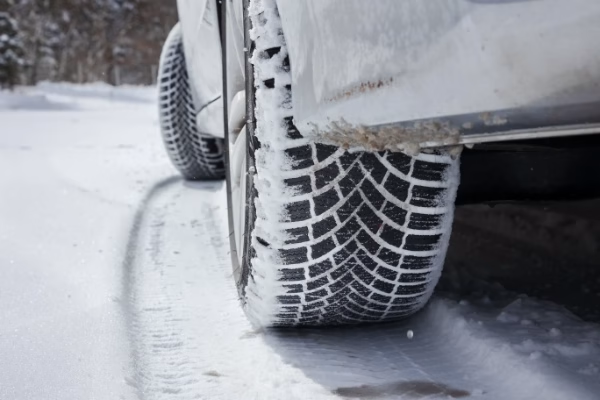
The tread on a tire is designed to grip the road, providing traction for acceleration, braking, and cornering. Cheap tires often have less effective tread patterns and are made from harder rubber compounds, which can significantly reduce their grip, especially in wet or icy conditions. This can lead to longer stopping distances and an increased risk of skidding and hydroplaning.
For more on how different types of tires perform in different weather conditions, check out our post, “All-Season Tires vs. Winter Tires: What Every Omaha Driver Should Know.”
5. Longer Stopping Distances:
In an emergency situation, every foot counts. A study by Consumer Reports found that some cheap tires can increase a vehicle’s stopping distance by as much as 20 feet compared to quality tires. This can be the difference between a close call and a serious accident.
6. Increased Risk of Blowouts:
The lower-quality materials and construction of cheap tires make them more susceptible to blowouts. A blowout at highway speeds can be catastrophic, leading to a complete loss of control of your vehicle.
The Ripple Effect: How Cheap Tires Can Damage Your Vehicle
The problems with cheap tires don’t stop at the tires themselves. The constant vibration and harshness of cheap tires can put a strain on your vehicle’s suspension and other components, leading to premature wear and tear. This can result in costly repairs down the road.
The Warranty Woes: Lack of Protection with Cheap Tires
Most reputable tire brands offer a warranty that covers their tires against defects in materials and workmanship. Many also offer a mileage warranty, which guarantees that the tires will last for a certain number of miles.
Cheap tires, on the other hand, often come with a limited warranty or no warranty at all. This means that if you have a problem with your cheap tires, you may have to pay for the full cost of a replacement.

What to Look for in a Quality Tire
Now that you know the hidden costs of cheap tires, you’re probably wondering what you should look for in a quality tire. Here are a few things to keep in mind:
Reputable Brands
Stick with reputable tire brands that have a proven track record of quality and safety. Some of the top tire brands include Michelin, Goodyear, Bridgestone, and Continental.
The Right Tire for Your Vehicle and Driving Style
There are many different types of tires on the market, each designed for a specific type of vehicle and driving style. Be sure to choose a tire that is a good match for your vehicle and the way you drive.
Professional Installation and Service
Even the best tires won’t perform as they should if they are not installed and serviced properly. Be sure to have your tires installed and serviced by a qualified professional.

The H+H Advantage: Quality Tires in Omaha
At the H+H family of dealerships in Omaha, we are committed to providing our customers with high-quality tires from reputable brands. Our service centers at H+H Chevy, H+H Kia, and H+H Jeep Dodge Ram are staffed by certified technicians who can help you choose the right tires for your vehicle and your budget.
We offer a wide selection of tires from top brands, and we have the latest equipment to ensure that your tires are installed and serviced properly. We invite you to visit one of our Omaha locations for a complimentary tire inspection.
Frequently Asked Questions (FAQs)
1: Are cheap tires really that bad?
While not all budget tires are created equal, they generally don’t offer the same level of safety, durability, and performance as quality tires.
They can be a viable option for some drivers, such as those who drive infrequently or only for short distances, but for most drivers, the long-term costs and safety risks of cheap tires outweigh the initial savings.
Plus, warranty, repair, and replacement coverages can be limited or not exist with some cheap tire brands and models.
2. How can I tell if a tire is too cheap?
An unreasonably low price is the most obvious indicator, but you should also look at the brand. If you’ve never heard of the brand, do some research to see what other drivers have to say about it.
You should also look at the tire’s UTQG (Uniform Tire Quality Grading) rating, which can give you an idea of its treadwear, traction, and temperature resistance.
3: Where can I buy quality tires in Omaha?
The service centers at the H+H family of dealerships in Omaha (H+H Chevy, H+H Kia, and H+H Jeep Dodge Ram) are a great place to buy quality tires. We offer a wide selection of tires from top brands, and our certified technicians can help you choose the right tires for your vehicle and your budget.
DRIVEHH.COM
All-Season Tires vs. Winter Tires.
Summary
The Hidden Costs of Cheap Tires:
While cheaper upfront, cheap tires can cost you more in the long run due to frequent replacement, reduced fuel economy, and potential damage to your vehicle.
Safety Risks:
Cheap tires can compromise your safety by reducing your vehicle’s grip, increasing its stopping distance, and increasing the risk of blowouts.
Performance Problems:
Cheap tires can lead to a noisier and less comfortable ride, poor handling, and reduced fuel economy.
What to Look for in a Quality Tire:
Stick with reputable brands, choose the right tire for your vehicle and driving style, and have your tires installed and serviced by a qualified professional.
The H+H Advantage:
The H+H family of dealerships in Omaha offers a wide selection of quality tires from top brands and expert installation and service.
Sources
- 8 Reasons why buying cheap tyres is a bad idea | Tyreright
- Why not cheaper tires? | BOB IS THE OIL GUY
- Cheap tires are a bad deal? More dangerous? Where’s the proof? | Reddit
- 4 Reasons Why You Shouldn’t Get Cheap Tires | Capital One Auto Navigator
- Should I fork out the money for expensive tires or just buy cheap ones and replace more often? | Quora
- Are Budget Tires Worth It? A Look at the Pros and Cons | RNR Tire Express
- The True Cost of Cheap Tires: Why They’re a Bigger Risk Than You Think | Yahoo
- Cheap vs. Expensive Tires: Are Cheap Tires Worth It? | The Rideshare Guy
- All-Season Tires vs Winter Tires: What Every Omaha Driver Should Know | DriveHH.com